
As technology has developed, the acceptable ways of creating music have evolved and been debated. How about now? Is music created by generative AI ok? Will AI be the end for musicians? Or even the end of music as we know it?
What is AI-Generated Music?
Music can be fully AI-generated using services such as Suno, owned by Warner Music Group. It produces songs based on text prompts by the user. A similar service is Udio, which entered agreements with Universal Music Group. Copyright lawsuits hand been filed against each of them in 2024 and 2025. Music can also be created that includes elements that are AI-generated, with other parts being human-made.
What Are Some Notable Songs That are AI-Generated?
In mid-November 2025, Billboard’s Country Digital Song Sales Chart had the AI song “Walk My Walk” with Breaking Rust as the number one song on the chart. The song has millions of streams on Spotify. Breaking Rust also has fans as evident by more than 60 000 followers on Instagram, as of writing this article. Breaking Rust’s Instagram account has posts with images that supposedly should be “the artist. As the physical appearance is inconsistent between the images and it is easy so far to realize that it is a “fake artist”. On a leading streaming platform, the artist is marked as verified in December 2025 even as it is a known AI-artist. The criteria for being verified appears not to take this into account. Looking closer at what chart the “Walk My Walk” did top, it should be noted that it is the sales chart and not the charts that is usually referred to as “the country chart” in short. It is estimated that it required about 3000 download sales to reach number one on the sales chart for Breaking Rust.
BBC Introducing had picked a song for boosting in one of its radio shows about upcoming artists that aired on November 6, 2025. The radio host said the song was “pitch perfect and amazing” when presenting the artist Papi Lamour with the song “Be Inspired” to listeners, per Rolling Stone’s reporting. This has caused a reaction from musicians who have spent years and effort to make it in the music business. Does AI created music deserve less lauding from media outlets because it replaces musicians? Should AI music not get platformed?
AI-generated music has also been found on streaming platforms lists of songs that perform well, such as viral song types of playlists. Velvet Sundown is an AI-generated music band that got more than a million listeners on Spotify in the summer of 2025, Berklee the music college noted in a blog post. The people behind the band confirmed that it was a synthetic music project on July 3rd on an Instagram account. In conjunction with this streaming success, journalists were criticized for not fact checking and streaming services criticized for not gatekeeping their platforms from “fake” music artists.
Xania Monet is an artificial intelligence artist that entered spot 30 on Billboard’s “Adult R&B Airplay” during week of 1 November, 2025, with the song “How Was I Supposed to Know?”. Xania Monet has been given the character of singer.
What are Fake Music Artists?
The notion of “fake” music artists is not new. Bobby Farrell, the front man of disco group Boney M, was not the voice behind the band’s hit “Daddy Cool” during live performances. It was sung by its producer in the studio, Frank Farian, and playbacked during concerts. Bobby Farrell only did the visualization on stage. Frank Farian later created Milli Vanilli with the same approach. Both groups were successful.
A different but related phenomenon is “ghost” artists that obfuscate the person behind the artist character. Daft Punk, the electronic dance music band, used helmets. Some ghost artists even perform songs that someone else has composed, which is also commonly accepted.
Then there are reproductions of actual artists. ABBA, the ultimate pop band, has performed as holograms in London with great success and appreciation from fans. KISS, the rock band, mulling the idea for themselves.
From these examples, we could make the assumption that “fake” music artists as described so far are often accepted. However, there are unacceptable forms of fake music artists. Impersonation is not allowed, i.e. to pretend to be someone else without that person’s permission. That would be a type of fake music artist that fans would not like to buy tickets to concerts for, unknowingly. Also, such misrepresentation is not acceptable on social media platforms.
Music Tools
Turning to tools for music creation, which ones could we accept?
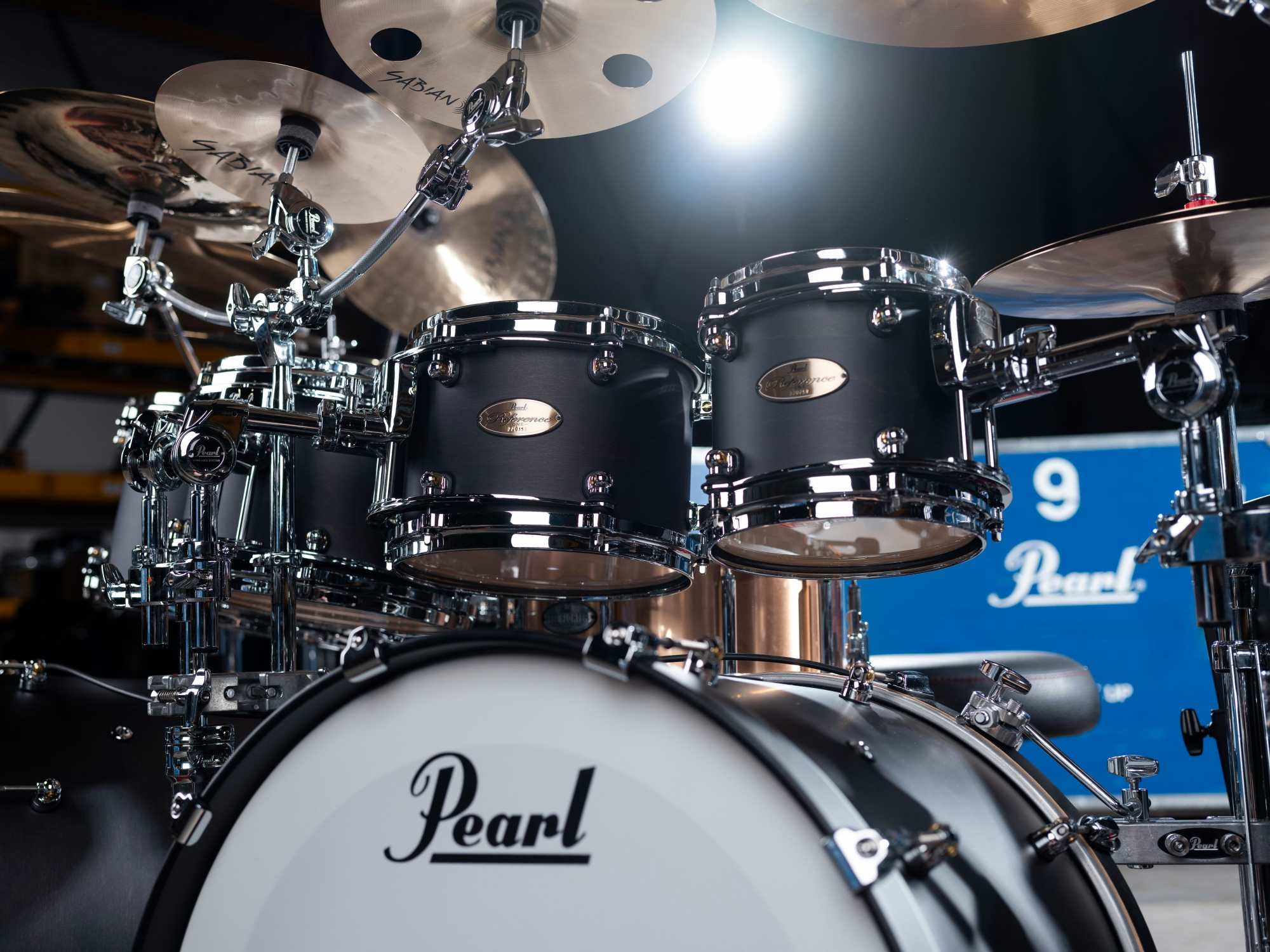
The oldest drum found is about 4000-7000 years old. The drum is a constructed music tool that has a drum skin membrane mounted on a shell or cylinder shape. Is this tool permissible to create music that is accepted? Yes, is probably your answer. The tool is operated by a human who plays the instrument to produce the sound. Today, nobody demands that drummers only hammer on their lap or so. Similarly, other forms of acoustic instruments are accepted as means for creating music.
Electricity
What about electricity? Should electricity be allowed when creating music or should it be all manual labor by humans to create the energy that gets manifested as sound waves in the air? Since being invented in 1932, electric guitars have been used and become common in multiple music genres from jazz to metal. Admittedly, plenty of people prefer acoustic instruments such as in symphony orchestras playing classical music. Nevertheless, the consensus is likely that when Yngwie Malmsteen is playing the classical music inspired “Icarus’ Dream Suite Op. 4” on a Fender Stratocaster, he is creating accepted music, taste preference put aside.
Semiconductors
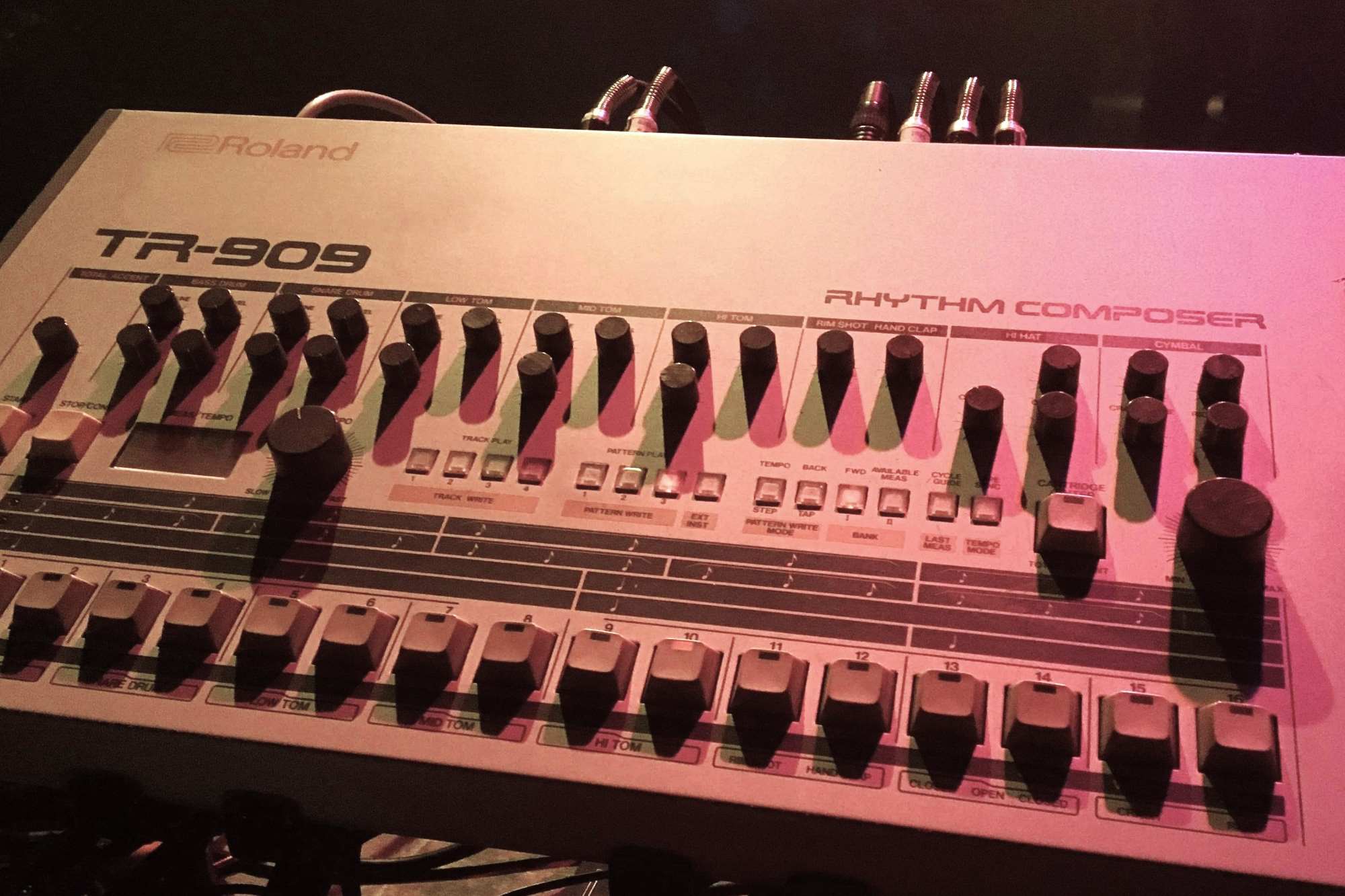
How about if the electricity runs through semiconductors to create drumbeats? Roland TR-808 was introduced in 1980 and its follow up Roland TR-909 have been foundational for music genres such as hip-hop and electronic dance music (EDM). You can hear the TR-808 in Marvin Gaye’s “Sexual Healing” and Afrika Bambaataa’s “Planet Rock”. These songs are frequently mentioned in best songs of all times, types of lists. Semiconductor music is ok, we could conclude. When drum machines came, some feared that they would replace human drummers. The machines were better at keeping a consistent tempo and were less costly than human drummers, it the argument was back then.
Computer Created Music
Computers could not go without a mention. Today, computers are used throughout the chain of music production, for example:
- Replacing acoustic instruments that create sound.
- Storing the produced sound on various forms of memory, such as SSD drives.
- Manipulating the sound with effects.
- Organizing and blending the different sounds in mixing.
- Outputting the final two track stereo sound.
Many of the songs on the Billboard charts have exclusively been created within computers, so that is not a criterion for unacceptable music. One example of a computer processed song could be Cher performing the dance pop hit “Believe”, where the voice is highly processed with Auto-Tune. This the so called “Cher Effect”. Believe was number one on numerous music charts in 1998. I.e. using computers when creating music is ok, based on the general reception of Believe and similarly created songs.
Synthetical Music
“Synthetically created content” is a term that gets used to describe what generative AI outputs when it creates images, video and music from text prompts. Some publishers attempt to put stickers on such synthetic content, as consumer information. Could this be the clue to accepted music?
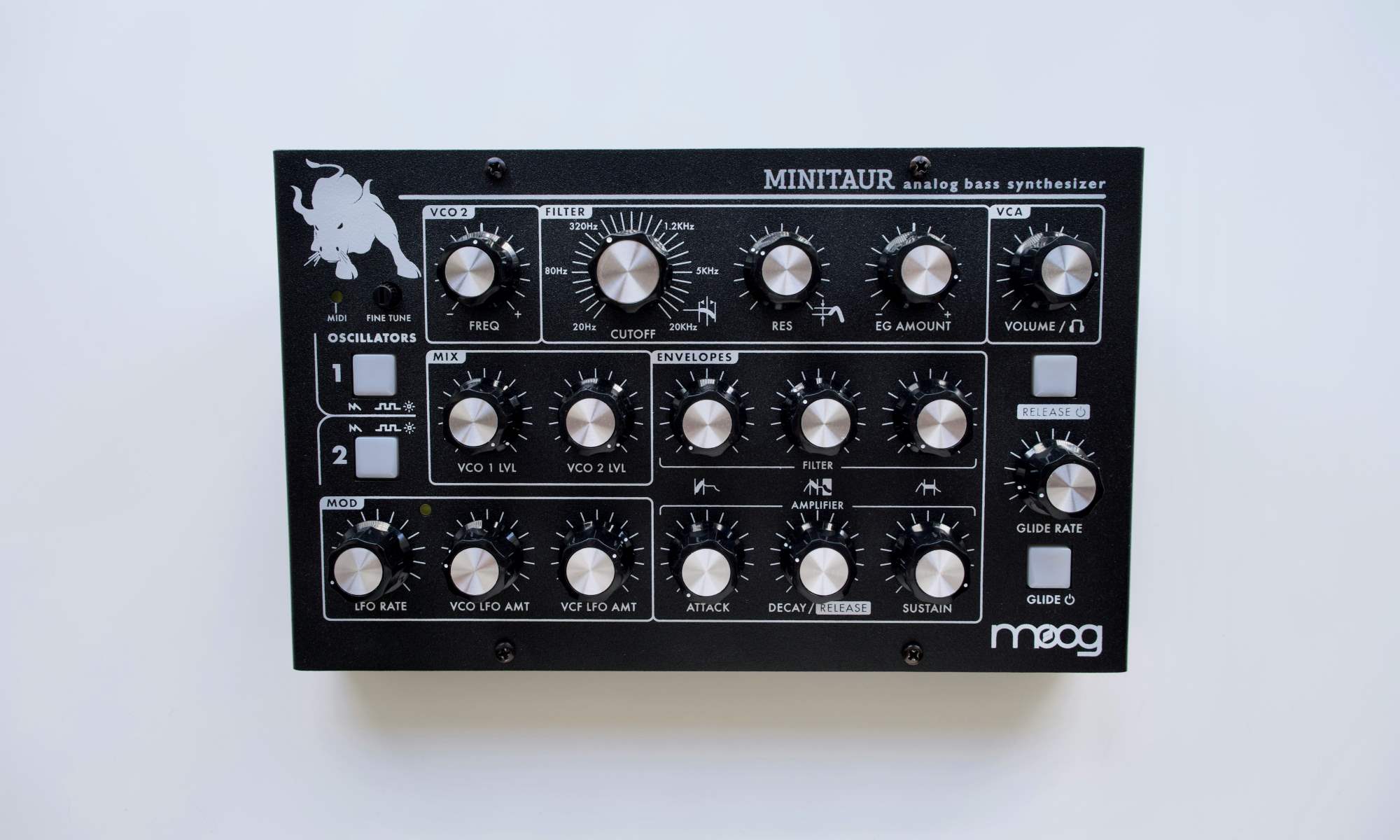
Well, obviously anyone the least interested in music has heard of synthesizers. These machines equipped with keyboards can be played to output music tones and also manipulate the sound. Some synths seem to sound like pianos; others are far less inhibited in their output. How many are not beginning their piano training on a synthesizer today, instead of an acoustic piano? Being synthetic does not seem to exclude music from being accepted. Using synthesizers, Jean-Michel Jarre created the much praised “Oxygen (part 4)”, and Kraftwerk created the milestone track “Trans-Europe Express”. Kraftwerk has inspired musicians like DJ and music producer Joel Mull, and many others. Synthesizers were even welcomed by bands in music genres such as rock, the super hit “The Final Countdown” by Europe has a synth riff as its most recognized character. Another example is Van Halen with “Jump”.
Kraftwerk’s “Trans-Europe Express” was in part interpolated (a section was replayed and reused, rather than directly sampled) for the previously mentioned Afrika Bambaataa track “Planet Rock”, which brings us over to copyright.
Sampling
Sampling without permission or licensing is against the law in most places worldwide. Sampling (reusing a section of a recording) using tools such as Akai S1000 became more common in the late 1980s. Many hip-hop tracks came to include samples. Music producer Josh Wink created one of the most important songs in electronic dance music, “Higher State of Consciousness”, including timestretching in an Akai S950 sampler. For the song, Wink also used two Roland TR-303 and one TR-909.
The most iconic music part to be sampled is probably the “Amen Break”. It comes from the 1969 “Amen, Brother” by The Winstons, where drummer Gregory Coleman plays a four-bar break that is about 6 seconds long. This drum break has been sampled and reused in recordings more than 2 000 times. Salt-n-Peppa “I Desire” and N.W.A “Straight Outta Compton” are among the many hip hop acts that have used the Amen Break sampling. In electronic dance music (EDM) you can find that Carl Cox “I Want You (Forever)” has the sample. Then there are thousands more songs that fans have taken to their heart. The music genre Jungle was more or less invented out of the Amen Break, with UK Apache with Shy FX “Original Nuttah” as one example. The Amen Break has also been used in other contexts, such as a commercial for Jeep, the autobrand
Thus, we can eliminate sampling in itself as a distinguishing factor for “fake” music or unacceptable music amongst listeners.
Large Language Models (LLM:s)
Large language models (LLM:s) are what is under the hood of chatbots like ChatGPT, Claude, Copilot, and MistralAI’s LeChat. LLM:s is what chatbots draws upon when they “think”. These LLM: s are created in a way that brings the thoughts to sampling of music. Chunks of texts and other content are collected in huge piles of data. In practice, this could mean scanning the pages of books that have been published. These actions of AI companies have triggered lawsuits from authors and publishers who claim copyright to the books. Similarly for music songs. The creation of LLM:s begins with copyright issues, much of which remains to be resolved.
Creating Music With AI
Later, if chatbots are used by consumers who instruct them to create a song similar to a well-known artist, a second set of copyright issues arise. While the resulting song is not a cover or direct sampling of an existing song, other similarities appear. The instrumentation, arrangements, style and ambiance might be identifiably that of the well-known artist, maybe even with a singing voice similar to that of the artist. There have been musicians whose songs have been mimicked using generative AI in such ways. Those initiating the creation of a song with the likeness of songs of another artist or songwriter are risking legal action against them.
The AI Generated Music Discourse
When we have dipped into various discussions on AI-generated music one underpinning differentiator has emerged that cause division in the debate. One camp seems to look at music as a form of art embodied by virtuosos, musicians who after long practice have become skilled in demonstrating the art. These musicians should be appreciated in society. Another camp seems to primarily view music as a form of entertainment that is consumed by listening. If the music sounds good, it is ok. Is what is acceptable music less about what is created, but rather how it is created?
Further into the future, will AI-generated music be more accepted depending on how AI was used? Is there a demarcation with a line that should not be crossed? In legal terms, probably yes. Is there such a thing as genuine music and not genuine music? Looking at music as a form of entertainment or a form of art requiring virtuosos might induce different answers.
The examples in the article of how technology has evolved with new tools for music creation that have become accepted are grantedly spotty. There are pockets of hold outs in the music landscape where many of the music making tools are still unaccepted. The guitar, and especially the electric guitar, is even today not welcome amongst classical music enthusiasts. Should they insist on labeling the music genre “western art music”, it appears more likely that they have such music tool exclusion. Supervizion is, however, music genre agnostic in terms of music clients served and cultural expressions come in different formats.
What is an AI Musician?
It is already clear that there are people who use AI in a way that creates music that broad masses of people like to listen to. Are these AI operators musicians? You be the judge. We are likely to find that some are better than others at creating music, even with the same tools. “Machine Whisperers” is a term that have been floated to describe them. They are skilled at creating well-crafted prompts that output appreciated music. We suspect that it is not necessarily the same people who will be Machine Whisperers as those who have been successful with the so far prevailing music tools.
Supervizion has songwriters and musicians as clients. From visiting their music studios, we have noticed that some of them demonstrate the sound they are after when communicating with others in the music production team. It could be tweaking nobs on the mixing console or in digital audio workstation (DAW), striking a few chords on the piano or the like. This instead of putting words into what they want to say. Being able to externalize thoughts in the shape of written text prompts is currently central to using AI for music generation. This could be one of the skills of an AI musician, a Machine Whisperer.
What Should Musicians Do About AI Generated Music?
Approaching AI, rather than distancing from it, will likely be wise for musicians. A major artist who is among the first to embrace AI generated music is 50 Cent. He has expressed that he really like the AI versions of his songs, referring to “21 Questions” especially. One of his points was that it allows his works to reach new audiences due to the song remake. 50 Cent has even reposted the AI version of his song.
Hip Hop was quick to adopt new music tools such as the drum machine and samplers. Is Hip Hop taking the lead again?
In an interview, 50 Cent said:
“Like, I really like those songs, it’s look… It will reach someone that I missed. Someone who couldn’t hear what I was trying to say to them, in the writing, can hear it now that it’s in that format.”
“I don’t think you can beat AI. I think it’s gonna… I think you need to go with it.”
Other A-list musicians have taken a hesitant or even resistant approach to AI generated music. Similar to how synthesizers were rejected at first by some. One concern is that AI will take over the jobs of musicians, both as creators and performers. At the same time, expressions of culture have been thought to be more of a safe harbor against the threat of job replacements, according to some academic researchers on AI’s job impact. From our observations, that moat is shrinking.
Is Music Generated by AI a Big Issue?
In September 2025, Deezer, the music streaming platform, reported that 28 % of the tracks that gets submitted to their streaming service are fully AI-generated and totals more than 30 000 tracks every day.
One of the AI tools used for generating music is Suno. Or should we start to say AI music instrument? Suno created a pitch deck for a funding round that was obtained by Billboard in November 2025. In the slides, Suno claimed that every 14 days songs the equivalent of Spotify’s entire music catalog are created using Suno’s AI tools. That is a huge number. We can expect that the future direction is an increase.
Supervizion manages the business interests of music artists. This includes the rights of the artists. We optimize the financial outcome of artists’ creative activities through advice. Our artist business management services take care of the companies of the client. AI is a theme in our business strategy work and we predict that its impact will be deeper than the music pirating of the early 2000s that our music business clients lived through. As mentioned here in this article, AI generated music has topped the charts and hologram concert performances have had great success already. I.e. both the creation and performance of music have been synthetic and yet still to the liking of consumers of music. The future is already here.
Can AI-Generated Music be Differentiated from Human-made Music?
An Ipsos Digital study conducted 6-10 October 2025 for Deezer, found that 97 % of the 9000 people across 8 countries included in their study could not tell which song that was fully AI-generated and which was song was human-made…
We have put together supplemental material in a playlist on YouTube with songs and artists mentioned in this article. It includes AI generated music and non-AI music. Would you be able to hear that the music is AI-generated? Also, you can compare 50 Cents “21 Questions” in the original version and the AI remake, both are in the Supervizion music playlist.
